
Transitioning from managing a mid-sized software development sprint to directing a massive, enterprise-grade technology initiative is a major career milestone, but it fundamentally rewrites the rules of engineering. When a project scales past a certain threshold, it enters a realm of exponential risk accumulation. You are no longer just responsible for tracking clean code repositories, optimizing database query pipelines, or organizing weekly team standups. Instead, a large-scale project forces you to sit at the center of an intricate, multi-layered matrix where software development loops continuously collide with complex financial infrastructure, physical hardware supply chains, real-world data security vulnerabilities, and mechanical fabrication logistics.
In a massive tech build, a minor architectural oversight, an opaque budget tracking system, or a physical data security blind spot will instantly cascade into severe deployment delays, catastrophic budget overruns, or complete project collapse. Many brilliant developers fail during their first enterprise launch because they remain hyper-focused on code syntax while completely ignoring the real-world operational foundations required to support that code at scale. Launching a successful large-scale technology project requires shedding the narrow perspective of a traditional programmer and fully stepping into the role of an operational systems architect. This comprehensive guide delivers the precise technical, financial, and logistical insights required to confidently lead your first enterprise technology project from initial scoping to flawless, secure physical deployment.
Establishing Fiscal Governance and Operational Liquid Infrastructure

Building a rock-solid, fully transparent financial foundation is the absolute baseline requirement for any large-scale technology project. When an engineering initiative expands to encompass enterprise microservices, global API integrations, and multi-region cloud deployment clusters, the volume of incoming and outgoing financial transactions escalates dramatically. If your project’s operational funds are casually commingled with general research and development pools or shared departmental budgets, you will instantly trigger corporate auditing failures and lose the granular visibility needed to track your exact burn rate. To prevent scope creep from quietly draining your resources, you must establish an isolated, fully automated corporate financial loop.
To manage high-frequency vendor payouts, recurring server hosting fees, and third-party SaaS subscriptions with absolute accuracy, you must route all project-related expenditures through a dedicated financial channel. Utilizing a distinct, high-capacity corporate checking account allows engineering directors to build clean, real-time programmatic ledgers that isolate software licensing costs from general administrative overhead. This segregated checking account should be linked directly to your automated sprint tracking dashboards, giving you the power to monitor your precise cost-per-milestone metrics and adjust resource allocations instantly before financial anomalies manifest as structural delays.
- Establish separate, trackable cost centers within your core ledger for cloud hosting, third-party software integrations, and physical prototyping components.
- Link your primary corporate banking feeds directly to automated expense forecasting tools to generate real-time predictive burn-rate warnings.
While establishing a modern checking account secures your digital operational liquidity, hardware-focused enterprise projects and tech startups must also navigate macro-economic variables when planning long-horizon development cycles. In highly volatile economic environments, holding your entire prototyping reserve in fiat currency presents a distinct inflation risk that can silently erode your purchasing power over a multi-year timeline. To insulate long-term research reserves against severe market fluctuations, sophisticated corporate treasuries frequently diversify a portion of their liquid holdings into high-liquidity, physical tangible assets. Implementing a corporate strategy to systematically buy silver or similar precious metals allows technology firms to establish a secure, tangible value anchor that preserves purchasing power, ensuring that when the time comes to execute massive capital purchases for physical manufacturing machinery, your development reserves remain entirely intact.
Hardening the Physical Technical Workspace and Preserving Intellectual Property
As a technology project scales, the physical environment where your engineering teams collaborate, code, and test prototypes becomes a high-value target for competitive surveillance, property theft, and accidental data exposure. Many first-time project directors implement ironclad digital cybersecurity firewalls, yet leave their physical workspace completely vulnerable to simple walk-in breaches. If your proprietary source code, localized staging servers, or cutting-edge hardware components are accessible to unauthorized eyes, your entire digital security posture is rendered meaningless. Hardening your physical workspace requires building a multi-layered defensive perimeter around your data labs and server rooms.
To eliminate dangerous visual blind spots and protect physical intellectual property from corporate espionage, you must partner with certified corporate defense specialists to execute a professional, enterprise-grade security system installation. A comprehensive security system installation must seamlessly integrate high-definition thermal video cameras with intelligent, AI-driven biometric entry systems at all access points. These advanced tracking networks should be configured to stream data to a centralized, encrypted security dashboard, ensuring that every physical entry into a sensitive testing lab is logged, verified, and mapped against active employee access rosters around the clock.
- Implement dual-factor physical authentication, combining proximity smart-cards with biometric iris or fingerprint scanners, at all main server room entryways.
- Configure automated real-time mobile alerts that immediately trigger if a secure laboratory door is propped open for longer than sixty seconds.
Beyond preventing unauthorized entry via a professional security system installation, you must actively defend your proprietary intellectual property against the silent hazard of physical data fragments. In a high-speed development environment, engineers frequently print out complex system architectures, jot down hard-coded API access keys on scrap paper, and review physical printouts of confidential user testing logs. If these sensitive documents are casually tossed into a standard waste basket, they can easily be recovered by external actors. Enforce an unyielding, end-of-day desk-clearing policy that requires the immediate destruction of all non-digital data. Deploy locked collection containers across every floor specifically for secure document shredding, ensuring that all confidential data papers undergo complete, cross-cut document shredding before leaving your secure facility.
Engineering Precision Prototyping Matrices and Custom Component Hardware
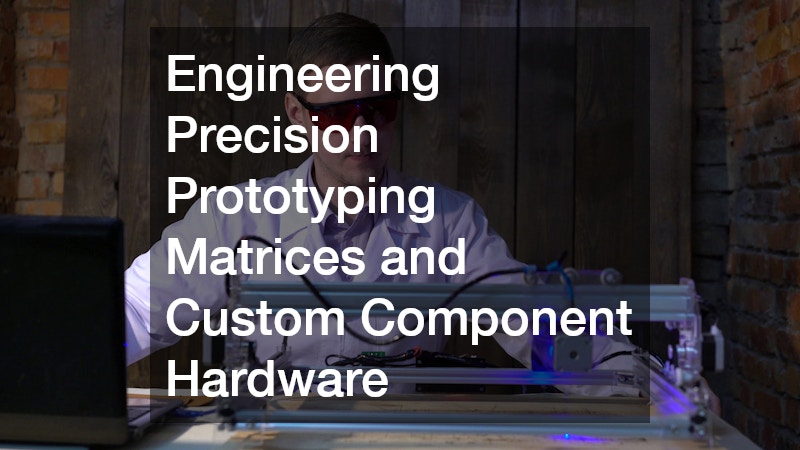
When your technology project transitions from pure software modeling into the physical hardware domain, such as building edge-computing enclosures, custom server brackets, or automated Internet of Things (IoT) physical nodes, the speed of your hardware iteration loop directly dictates your time-to-market. Relying entirely on external, international tooling suppliers for early-stage prototype parts can cripple your project timeline, introducing weeks of shipping delays for minor design adjustments. To maintain a competitive development pace, you must build an agile, high-precision prototyping matrix right within your localized hardware development laboratory.
For the fabrication of structural housing shells, custom device faceplates, and high-tolerance aluminum enclosures for delicate circuit boards, subtractive manufacturing is the industry standard for durability and electromagnetic shielding. Integrating high-performance, computer-automated machining tools directly into your laboratory workflow allows your engineering team to execute precision CNC machining on demand. Possessing in-house CNC machining capabilities means a mechanical engineer can modify a 3D CAD design file, upload the code to the milling machine, and hold a perfectly calibrated, production-grade enclosure component in their hands in a matter of hours rather than weeks.
- Maintain a precise digital catalog of all 3D CAD design files, tracking revisions with the same version-control rigor applied to software code.
- Utilize high-grade block aluminum or polycarbonate materials within your milling loops to guarantee structural resilience during rugged field testing.
While advanced automated milling handles your high-precision device enclosures, a large-scale infrastructure project will also require a vast array of supporting structural elements, heavy-duty mounting rails, and custom server cage brackets to securely anchor equipment within industrial racks. Fabricating these rugged supporting frameworks involves sourcing, cutting, and welding a wide array of raw steel angles, channel tracks, and misc metal items. Properly managing these misc metal fabrications ensures that your heavy server switches, auxiliary battery banks, and custom power distribution blocks are structurally supported against continuous mechanical vibration and thermal expansion stress. By balancing high-precision automated milling with rugged structural metal fabrication, you give your engineering team the exact hardware agility needed to deploy massive physical networks with absolute confidence.
Managing Hardware Lifecycles, Component Recovery, and Micro-Contaminant Extraction
A major financial and operational pitfall that trips up first-time tech directors is the complete absence of a structured hardware asset management and recovery strategy. Throughout the lifecycle of an enterprise-scale technology project, your engineering teams will cycle through an immense volume of development hardware, alpha-testing tablets, graphics processing units, and localized staging servers. As components become outdated or project requirements shift, a lack of oversight will lead to thousands of dollars in high-value electronic assets sitting idle in storage closets, slowly depreciating while cluttering your operational space.
To offset the massive capital expenditures required to purchase cutting-edge, next-generation server infrastructure, you must establish a systematic asset recovery framework. Building a corporate partnership for structured electronics trade-ins allows your organization to securely decommission legacy laptops, outdated testing phones, and old networking routers in exchange for substantial financial credits or cash returns. Before any device leaves your facility for commercial electronics trade-ins, it must undergo a rigorous, multi-pass cryptographic data wiping process that completely overwrites the underlying flash storage, ensuring that no lingering corporate credentials or proprietary algorithms can ever be recovered by external parties.
- Maintain a centralized hardware asset database that tracks the serial numbers, assignment histories, and depreciation curves of every corporate device.
- Enforce a mandatory data-sanitization certification log for every single hardware asset designated for commercial liquidation or recycling.
While asset liquidation manages macro-level hardware lifecycles, maintaining micro-level hardware integrity is equally critical when fabricating custom printed circuit boards (PCBs) for your specialized tech components. During the soldering and assembly process, PCBs inevitably accumulate microscopic flux residues, airborne dust particles, and tiny metallic fragments. If left on the board, these micro-contaminants can absorb ambient moisture, create capacitive bridges, and cause catastrophic electrical short circuits across high-frequency microprocessor pins. To eliminate this hidden risk, custom hardware labs must utilize professional-grade ultrasonic cleaning tanks filled with specialized dielectric solvents. Industrial ultrasonic cleaning uses high-frequency sound waves to create millions of microscopic cavitation bubbles that violently implode within the solvent, stripping away all microscopic contaminants from complex multi-layered pin components without inducing any physical stress or damaging delicate surface-mount connections.
Scaling Infrastructure Testing Loops and Documenting System Architecture
The final phase before launching an enterprise technology platform into a live, public production environment is the execution of rigorous, high-volume infrastructure testing loops. An architecture that performs flawlessly when evaluated by twenty internal developers can easily collapse under the unpredictable, high-load stress of twenty thousand concurrent public users. To guarantee structural reliability, your engineering team must simulate extreme operational environments, subjecting your cloud database clusters, localized edge nodes, and hardware switches to artificial data spikes, sudden network disconnects, and intense thermal loads.
Managing the immense cost of sourcing advanced diagnostic hardware for short-term testing windows requires a disciplined approach to capital expenditure. Rather than permanently purchasing incredibly expensive, highly specialized load testing units, climate simulation chambers, and digital signal generators that will sit completely unused after launch day, utilize flexible equipment rental networks. Capitalizing on precision equipment rental pipelines allows your testing team to temporarily source top-tier diagnostic machinery precisely for the duration of your alpha and beta stress-testing windows. This strategic utilization of equipment rental assets preserves your precious capital reserves for core development needs while ensuring your infrastructure is vetted using world-class verification tools.
- Draft detailed service level agreements with your hardware rental vendors to guarantee immediate, on-site equipment replacement if a testing unit malfunctions.
- Execute simulated power-grid failure cycles while your platform is under full operational load to verify that automated cloud failovers engage seamlessly.
As your testing teams push the infrastructure to its absolute physical limits, the rapid documentation of system architecture modifications, network configuration changes, and unexpected hardware fault logs becomes a monumental administrative challenge. When a critical network switch fails at two o’clock in the morning during a high-stress load test, engineers cannot afford to halt their physical repair workflows to type out lengthy, manual incident reports on a keyboard. To streamline this vital data capture, equip your field technicians and data center engineers with enterprise-grade digital dictation systems. Utilizing digital dictation systems allows your core technical personnel to verbally record precise structural changes, server room code anomalies, and hardware configuration overrides completely hands-free while actively manipulating components. By integrating automated speech-to-text processing layers, the audio data captured by your digital dictation systems can be instantly transcribed and indexed directly into your central engineering repositories, ensuring that your system architecture documentation remains perfectly accurate, completely up to date, and immediately accessible to every developer on your global team.
Ultimate success in the enterprise tech arena is achieved by completely shedding the narrow perspective of a traditional programmer and fully embracing the rigorous, multi-faceted mindset of an operational systems architect. By taking absolute control of your project’s physical and digital variables, from routing expenditures through isolated corporate checking accounts and executing automated 3D laser manufacturing loops to hardening your proprietary data labs via professional security system installations and deploying scalable equipment rental testing arrays, you successfully insulate your technology platform from systemic failure. Establish a dedicated, highly collaborative network of certified security consultants, expert mechanical fabricators, and specialized logistics providers who respect the unique realities of your custom property. Command your infrastructure with technical precision, leverage the data, and execute your deployment pipeline with the absolute mechanical confidence required to turn your first massive technology vision into an unassailable, world-class reality.